@DSORennie
Washington bureau chief and Lexington columnist of The Economist. Ex-corr in Beijing, Brussels, London, Sydney. So thoughts on Asia-Pacific, EU, UK too
Wednesday, November 18, 2015
Does this matter?
Soon afterwards, former president and chief content officer Joel Cheatwood also exited to join Balfe in the venture.
Glenn Beck's TheBlaze downsizes in New York
Wednesday, November 11, 2015
The Beginning of Sound
Toyplayer chose the "Website" category in 2012 to present his topic, Silent to Sound: How Sound Revolutionized the Movie-Going Experience, in the National History Day competition in Washington, D.C.
Toyplayer's mom found an “interesting Jacksonville connection” when helping him do the research for his project that NHD wasn't even going to consider but did only because his mom made them as he had won the year before in a different category.
The interesting Jacksonville connection isn't that Toyplayer's mom asked me to critique his website about 10 times because I couldn't tell her that his website is just not that interesting.
Toyplayer's mom found an “interesting Jacksonville connection” when helping him do the research for his project that NHD wasn't even going to consider but did only because his mom made them as he had won the year before in a different category.
The interesting Jacksonville connection isn't that Toyplayer's mom asked me to critique his website about 10 times because I couldn't tell her that his website is just not that interesting.
I assume Toyplayer didn't win anything because the topic was "too ambitious" for the category he chose in which to present it.
Photo credit: Toyplayer's Directors page
Tuesday, November 10, 2015
Chapter Three
Milne and the tonstant weaders:
A Levinasian Case for WINNIE-THE-POOH and THE HOUSE AT POOH CORNER.
@drlewood
Monday, November 9, 2015
Dream Vacation: Unfriended!
1600 Silver Springs Boulevard.
Between Ocala and Silver Springs Park
under the orange trees - America's most unique parking lot
Sunday, October 11, 2015
Damn you Hugo Lindgren!
Last weekend the arch-nemesis Johnson presumably featured my comment (below) on account of his "reason to rely" verbiage on On Language: switched off, a post of several years ago concerning the New York Times magazine's new editor Hugo Lindgren's mistake to cut the "On Language" column, which, before being taken up by a linguist named Ben Zimmer, was authored by the late, great William Safire.
Johnson, in dismay, directed his readers to "like" the Keep "On Language" in the New York Times Facebook page started by irate NYT readers to convince Hugo Lindgren to keep "On Language" in the NYT.
Sadly, I didn't like the Facebook page itself but, instead, liked Johnson's post on the page. In the end it couldn't be said that the 866 page-likers were of enough influence to sway the direction that Hugo Lindgren was to take the magazine despite Johnson's best effort.
To this day, though, that Facebook page is still in existence; the last entry, dated November 11, 2013, is titled simply: The end of the Lindgren era, with a link to a POLITICO media entry.
As far as I know, Lindgren is still Acting Editor for The Hollywood Reporter.
Johnson, in dismay, directed his readers to "like" the Keep "On Language" in the New York Times Facebook page started by irate NYT readers to convince Hugo Lindgren to keep "On Language" in the NYT.
Sadly, I didn't like the Facebook page itself but, instead, liked Johnson's post on the page. In the end it couldn't be said that the 866 page-likers were of enough influence to sway the direction that Hugo Lindgren was to take the magazine despite Johnson's best effort.
To this day, though, that Facebook page is still in existence; the last entry, dated November 11, 2013, is titled simply: The end of the Lindgren era, with a link to a POLITICO media entry.
As far as I know, Lindgren is still Acting Editor for The Hollywood Reporter.
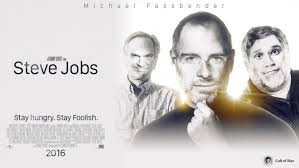
| Michael Fassbender plays the iGenius |
Sunday, August 9, 2015
Vigorously omitted words
As a long-time reader of economist.com, I took great
interest in, and in fact commented upon, the most recent Johnson post at the
Prospero blog. The subject was brevity. The same brevity found in Cornell
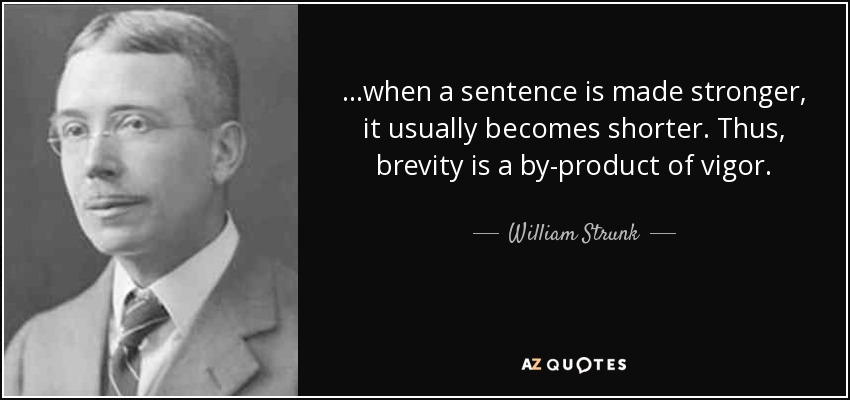
University professor William Strunk, Jr.’s usage textbook, Elements of Style, which
he had written himself. Strunk’s “little book,” as he referred to it, would later be revised by E.B. White, a former student.
As I know, the reason I took interest in Johnson’s post,
Briefly, is this blog’s post, The Case for Brevity, written exactly one year (less one day) ago. Johnson explained that he had begun a new editing job and caged
his post as a lesson suggestion in copy-editing to teachers of rookie writers.
Which further reminded me that I had re-admitted to the
College of Arts and Sciences at University of North Florida to finish my communications
degree shortly before “Subject – Verb – Object” was my reply to Strunk’s
59-word essay that would change the nature of E.B. White’s world (see "The Case for Brevity" for full context).
At any rate, “Briefly” is a 639-word essay, which I’ll cut
to 345 words (apologies to George Orwell) as an exercise in creating blog content:
EVERYONE knows
tweeting is ruining kids’ writing.
Or is it? Structuring
sentences into 140 characters might be teaching young writers one of the most
cherished virtues among those who deal professionally with writing: brevity.
Johnson has just changed jobs, from reporting to editing. Before, copy went from
my hands to another's, and it was their job to query, reshape and trim
it—difficult work that inevitably made it better. Now I am on the other end of
the exchange, and much of my first week was spent merely making pieces shorter.
Editing for print
means not only making sure a piece is interesting and accurate, but also
meeting a space-limit tightly defined by the size of a page. Online, when an
editor asks for 650 words and a writer sends 1,100, the result is a groan. When this happens in print with a deadline
looming, the result is panic. The piece simply must fit.
Why do people write
more than they should, when most people find writing difficult? This may be
because during their education, young writers are given a kind of assignment
that may do lasting harm: they are told to write papers to minimum lengths.
Why do more teachers
not, instead, give students an appreciation for brevity? William Strunk, one of
the authors of the American usage guide “Elements of Style”, was said by his
student (and later editor) E.B. White to grip the lectern in his writing class
and say “Omit needless words! Omit needless words! Omit needless words!”
A rule should not, of
course, become a compulsion. Strunk did not need to say “Omit needless words!”
three times, but it is more memorable that way. Anyone snipping every needless
word from our style guide would turn its attempts at gentle humour into
relentless hectoring.
As for teachers, try
the following trick: assign students a paper of ten pages, and then tell them
the real assignment is to trim it back to five in class, with the clock
ticking. Then send the student who completes the assignment fastest to our
internships page.
As for UNF, I’ll be extremely annoyed in two weeks if I can’t
get into my last class because I’m wait-listed.
Tuesday, August 4, 2015
August dogs
Obviously not a snapshot with a smartphone but a tie-in with Elliott Erwitt at Flipped Again.
Elliott Erwitt: New York City 2000
Elliott Erwitt: Dog Show, Birmingham 1991
I assume blog followers have no objection to bulldogs or poodles.
Saturday, August 1, 2015
Dog day of August
Southside Animal Clinic sent a Happy Birthday e-card to Jorja. We must have told them she was born today. I think she's seven.
"Yo... what's up with that?"
Wednesday, July 15, 2015
Saturday, April 11, 2015
Don't go there...
NOTE (to marine biologists without artistic license) --
The crustacean featured here is, obviously, a lobster.
Cancer. Salvador Dalà 1967
Sunday, August 10, 2014
The case for brevity
The Great War began in Europe 100 years ago this month. America did not enter World War I until April 1917. At its close, E.B. White was a student at Cornell University. He took an English course in 1919 with William Strunk, Jr. A little book penned by the professor named The Elements of Style was the course text.
White graduated from Cornell, proceeded to forget about Strunk's little book until Macmillan commissioned him to revise it in 1957. He added CHAPTER V - AN APPROACH TO STYLE with such useful reminders as "Write with nouns and verbs."
White revised his revision in 1972, then again in 1979, for which he wrote an introduction introducing William Strunk. The professor sarcastically coined the phrase 'little book' as it was privately published by himself. In its original form, The Elements of Style was a 43-page summation of the "case for cleanliness, accuracy and brevity" in composition.
White warns William Strunk's rules and principles are a series of commands. "Omit needless words" is imperative. White strived for 60 years to omit needless words after the professor's oration on brevity:
White graduated from Cornell, proceeded to forget about Strunk's little book until Macmillan commissioned him to revise it in 1957. He added CHAPTER V - AN APPROACH TO STYLE with such useful reminders as "Write with nouns and verbs."
White revised his revision in 1972, then again in 1979, for which he wrote an introduction introducing William Strunk. The professor sarcastically coined the phrase 'little book' as it was privately published by himself. In its original form, The Elements of Style was a 43-page summation of the "case for cleanliness, accuracy and brevity" in composition.
Vigorous writing is concise. A sentence should contain no unnecessary words, a paragraph no unnecessary sentences, for the same reason that a drawing should have no unnecessary lines and a machine no unnecessary parts. This requires not that the writer make all sentences short or avoid all detail and treat subjects only in outline, but that every word tell.
***
"There you have a short, valuable essay on the nature and beauty of brevity -
59 words that could change the world," said E. B. White.
"Subject-Verb-Object" is my reply.
Saturday, August 2, 2014
Final Credit
There are two obvious similarities between "Long Live Walter Jameson" and "Queen of the Nile"-- old women are catalyst characters and the episodes end with the central characters as dust within suit clothes on the floor. Queen was Charles Beaumont's final Twilight Zone credit but his friend Jerry Sohl actually wrote the teleplay.
Sohl had owned a scarab ring, a symbol of immortality, which inspired the idea. The two worked out the story details in a half hour and Sohl went home to write the teleplay. It kind of shows. The plot of Queen is not as intricately woven as Walter Jameson. The two main characters are shallow and uncompelling. The old woman, who is the the Queen's mother (daughter?), steals the show.
But I think Sohl wrote Queen as almost a tribute to, rather than a rehash of, Walter Jameson. Beaumont suffered from a "mysterious brain ailment" in which he began to age rapidly, his speech slowed, and he lost his ability to concentrate. Eerily, his son said when he died at age 38, Charles Beaumont looked to be about 95 years old.
Sohl had owned a scarab ring, a symbol of immortality, which inspired the idea. The two worked out the story details in a half hour and Sohl went home to write the teleplay. It kind of shows. The plot of Queen is not as intricately woven as Walter Jameson. The two main characters are shallow and uncompelling. The old woman, who is the the Queen's mother (daughter?), steals the show.
But I think Sohl wrote Queen as almost a tribute to, rather than a rehash of, Walter Jameson. Beaumont suffered from a "mysterious brain ailment" in which he began to age rapidly, his speech slowed, and he lost his ability to concentrate. Eerily, his son said when he died at age 38, Charles Beaumont looked to be about 95 years old.
Queen of the Nile
Episode 143, original air date: 3-6-1964
Wednesday, July 30, 2014
Charles Beaumont's Fate
Charles Beaumont wrote a number of memorable Twilight Zone episodes, among them "Long Live Walter Jameson" and "Queen of the Nile." The immortality theme is engaged in both. I've read elsewhere that Long Live... is the obvious antecedent to a Queen rehash, but I don't think it's uncommon for a writer to employ a recurring topic. I've pulled both episodes to compare in a subsequent post.
Long Live Walter Jameson
Episode 24, original air date: 3-18-1960
Walter Jameson is a popular history professor with a seemingly first-hand knowledge of the Civil War. As the story opens, an elder professor is sitting in on his lecture. After class the professor asks to speak with Jameson and invites him to dinner that evening. It is unclear how well these two know each other beyond a brief reference to Susannah.
The professors live on campus across the street from each other. As Jameson leaves his home that evening an old woman watches him from behind a tree in the yard.
The door is answered by Susannah Kittredge, the professor's daughter and the soon-to-be Mrs. Jameson. After dinner, Professor Kittredge shoos her off to return to her doctoral studies. He and Jameson resume a chess game apparently begun on a previous evening.
Further, at the lecture Jameson had read intimately from a Civil War officer's diary. Intrigued, Kittredge references a book of Mathew Brady Civil War photographs, not really expecting to find anything. But there was Jameson's likeness, with the same mole on his chin, and even pinky ring on his finger!
Jameson ultimately reveals himself to be old enough to know Plato. An alchemist imparted him with agelessness, but, not imperviousness to injury. Kittredge is amazed he survived all these years without a scratch. He begs him to share the secret of immortality but Jameson doesn't know how. Besides, would he want to be a 70-year-old man for an eternity? Jameson had tried to kill himself many times over the years but was too cowardly to do so.
"It's death that gives this world it's point," he reflects.
Kittredge realizes Jameson cannot marry his daughter. She will grow old and he will leave her. Susannah hears her father's shouts and rushes into the room. Jameson insists
From the darkness a woman calls his name. He shines a desk lamp in her face. It is the old woman who had watched him earlier from behind a tree. She is Laurette. He pretends he doesn't know her but she is one of his many wives abandoned over the centuries. She had seen his engagement announcement to Susannah in the newspaper. Laurette could not let another woman suffer her fate. There is a scuffle in the dark and the gun is fired.
Kittredge hears the shot and rushes across the street. He passes Laurette as she runs out the door. Jameson tells him not to enter room, but Kittredge turns on the light and walks toward him. He sees Jameson has been shot. Jameson sighs with relief, "It is happening."
Kittredge watches in horror as Jameson ages into decrepitude before his very eyes.The professor turns off the light as Susannah rushes into the room.
"Dad, what is that on floor?"
There lay only Jameson's suit clothes.
"I don't know dear. Dust, only dust."
Tuesday, July 22, 2014
Curse of a Shudra
The Doll
Night Gallery
Episode 5, original airdate 1-13-1971
Teleplay by Rod Serling
A picture of ugly dolls reminded me the other day of what is without a doubt one of the scariest Rod Serling skits I've ever seen. I remembered the doll's face but not the story.
A doll is sent from India toBritish (unnecessary qualifier) Colonel Masters. When he returns home after his long tour of duty, his young niece excitedly shows him a dreadful doll. When confronted alone, the housekeeper explains she thought he had sent the doll but that there was "something terribly evil" about it.
The colonel buys a new doll for his niece, who later tells him the old doll said she didn't like the new doll and to give it back. The colonel tells her to give it another go but that night he hears his niece sobbing. He and the housekeeperrun rush into her bedroom only to see that the "hateful thing" had ripped the new doll to shreds.
The next day a man arrives to see the colonel. He is the brother of a man recently executed in India. Colonel Mastersexplains expounds on circumstance: his brother was convicted for leading a series of raids against British outposts. The man replied that he was a shudra, a believer in magic, and he had sent the cursed doll to the colonel's house. He warns the colonel that the doll cannot be destroyed "until it has fulfilled its mission".
As the man leaves he said, “The doll has teeth and there is no medicine on earth to save you."
The colonel picks up a hot poker from the fireplace and climbs the staircase. Shockingly, the doll is sitting at the top of the stairs. Then the colonel's scream is heard and the sound of tiny feet running away. The colonel calls the housekeeper into the library where he tells her he has been bitten by the doll and to bring it to him. When she comes back, he throws the doll into the fireplace. "Now it is destructible. It has done its job," he said with a sigh of relief.
The colonel knows he will die soon. He instructs the housekeeper toget retrieve from his dresser a sealed envelope from his dresser addressed to an Indian man addressed to an Indian man. "See that it's delivered to him immediately and tell him the thing has happened. He will know what to do."
The Indian messenger arrives at the apartment of the shudra. He gives him a box and tells the shudra it is a gift from the colonel. "You gave him a gift. He reciprocates," he said and walks away. The shudra opens the box, turns ashen and drops it. Inside the box is a doll that looks like the colonel. It opens its eyes and smiles.
Apparently the colonelwas also was a believer in shudra magic. Full review of The Doll by David Juhl (Nov. 2013)
Night Gallery
Episode 5, original airdate 1-13-1971
Teleplay by Rod Serling
A picture of ugly dolls reminded me the other day of what is without a doubt one of the scariest Rod Serling skits I've ever seen. I remembered the doll's face but not the story.
A hideous doll becomes an agent of revenge against an officer in Queen Victoria's colonial forces.
A doll is sent from India to
The colonel buys a new doll for his niece, who later tells him the old doll said she didn't like the new doll and to give it back. The colonel tells her to give it another go but that night he hears his niece sobbing. He and the housekeeper
The next day a man arrives to see the colonel. He is the brother of a man recently executed in India. Colonel Masters
As the man leaves he said, “The doll has teeth and there is no medicine on earth to save you."
The colonel picks up a hot poker from the fireplace and climbs the staircase. Shockingly, the doll is sitting at the top of the stairs. Then the colonel's scream is heard and the sound of tiny feet running away. The colonel calls the housekeeper into the library where he tells her he has been bitten by the doll and to bring it to him. When she comes back, he throws the doll into the fireplace. "Now it is destructible. It has done its job," he said with a sigh of relief.
The colonel knows he will die soon. He instructs the housekeeper to
The Indian messenger arrives at the apartment of the shudra. He gives him a box and tells the shudra it is a gift from the colonel. "You gave him a gift. He reciprocates," he said and walks away. The shudra opens the box, turns ashen and drops it. Inside the box is a doll that looks like the colonel. It opens its eyes and smiles.
Apparently the colonel
Friday, July 18, 2014
Zoo To Do
The reticulated giraffe (Giraffa camelopardalis reticulata), also known as the Somali giraffe, is a subspecies of giraffe native to Somalia, southern Ethiopia, and northern Kenya.
The reticulated giraffe is among the most well-known of the nine giraffe subspecies. Together with the Rothschild giraffe, it is by far the giraffe most commonly seen in zoos.
Seen in Jacksonville Zoo and Gardens
Wednesday, June 25
Friday, July 4, 2014
Tuesday, June 17, 2014
Time Lapse
The Editor did not attend
a Battle of Fort Sumter reenactment on
April 12, 1991 to mark the 130th anniversary of the first shots fired in the U.S. Civil War.
"A long exposure reveals cannonballs’ paths in a battle reenactment near Charleston, South Carolina, April 1961."
Photograph by Thomas J. Abercrombie, National Geographic Creative
Subscribe to:
Posts (Atom)


, justwithout forethought to the age of big data.In thanking me for his featured comment Johnson might have noted that one of my sentences (embolden for emphasis) needed a copy edit:
He acknowledged in 2010 the need to teach important formulaic expressions without forethought to the age of big data. [strike:
(,) just]There is normally a red ribbon tied to a featured comment which I couldn't grab in my copy and paste. The graphic inspiration for his post was a picture of Lego construction workers.
The graphic inspiration for my post is a @lanegreene tweet in need of a copy edit.
Thus:
The 2013 biopic "Jobs" starring Ashton Kutcher grossed only $36m worldwide whereas the unsympathetic "Steve Jobs" should be a box-office hit.